Author: Vicki Cutler

Updated HSE building safety guide published

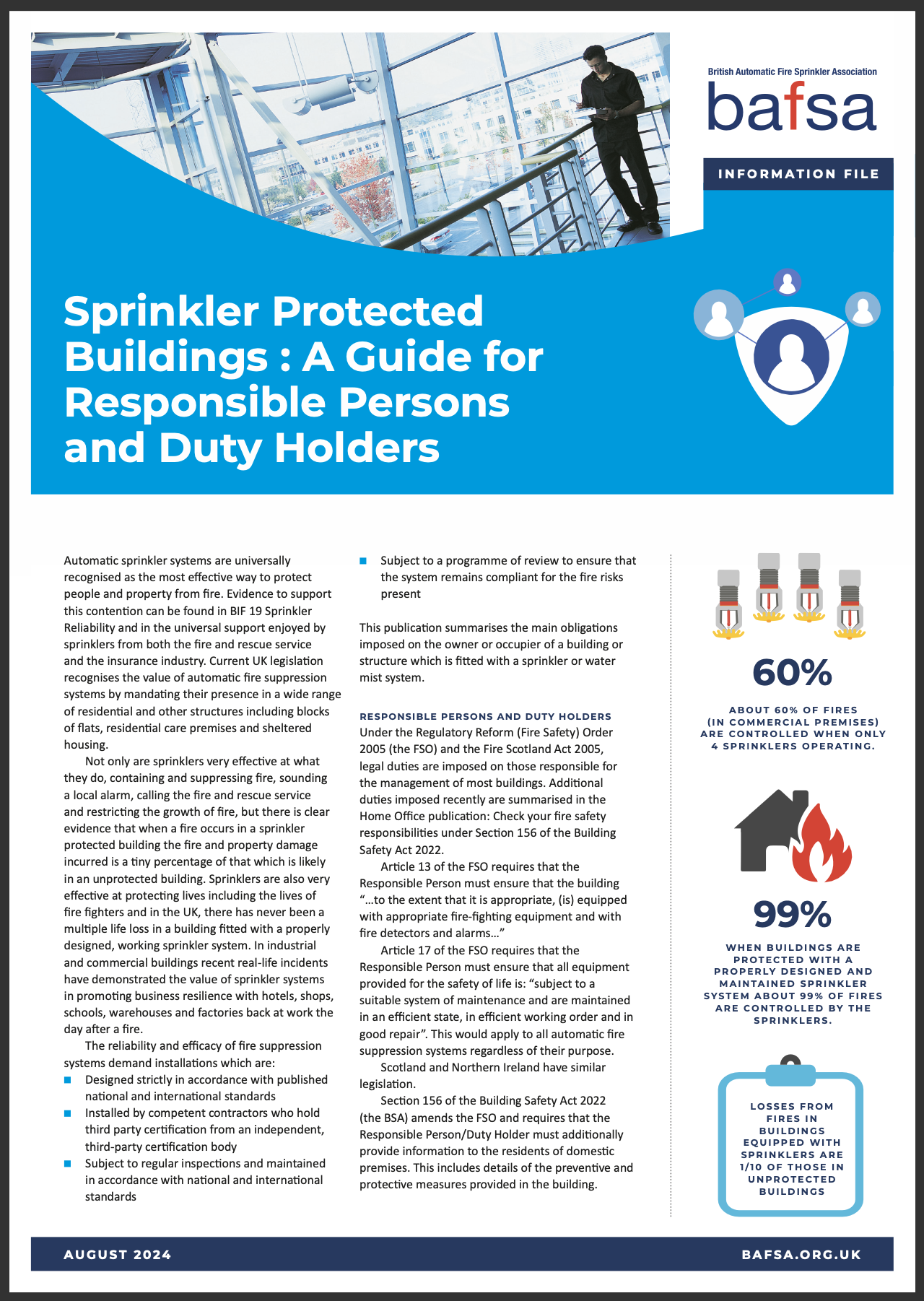
A government-issued building safety guide has been updated to help accountable persons assess safety risks in high-rise residential buildings.

Applying to England, the detailed guide from the Health and Safety Executive (HSE) covers information about the risk assessment team, what to assess, all reasonable steps, risk assessment methods, and how to record assessments.

Aimed at non-specialists to help them with assessing the risk of the spread of fire and structural failure, the guidance states:

Your assessment will help to demonstrate that you understand the risks and manage them effectively. It will also help you to demonstrate that you have taken ‘all reasonable steps’ to manage building safety risks.

You’ll find it easier to decide what to do to prevent building safety incidents or reduce their severity. You may also identify other reasonable steps you can take to reduce the risk further.”

As detailed in the guidance, a risk assessment team should include those with knowledge and experience in safety management systems, fire safety, and structural safety, though it adds that such teams do “not have to include consultants or other specialists”.

You and your organisation know your building better than anyone else and you may be able to assess the risks yourselves.

You can read more on the FPA website.

Fire risk assessor competence standard opens for comments

As part of the development process for the new BSI standard, BS 8674 Built environment – framework for competence of individual fire risk assessors – Code of practice, the completed draft has now been opened to the public for further comment.

With a remit to give recommendations for competence criteria to be met by individuals undertaking general fire risk assessments in occupied buildings, BS 8674 is based upon the work done in the Fire Sector Federation’s approved code of practice for fire risk assessors, and on the recommendations and competence criteria set out in BS 8670-1.

Read more via the FPA website.

For details of the draft and to add comments, visit the BSI website.

Regulator publishes findings from its thematic review of social landlords’ Annual Assurance Statements

The Scottish Housing Regulator has published the findings from its thematic review of how social landlords assure themselves about their compliance with regulatory requirements, and how this helps them to inform their Annual Assurance Statements.

All social landlords are required to submit an Annual Assurance Statement to the Scottish Housing Regulator by the end of October each year about their compliance with regulatory requirements.

The Regulator visited 13 landlords to explore how they assured themselves they complied with regulatory requirements and their approach to preparing the Statement. The visits had a particular focus on how landlords assured themselves about meeting their tenant and resident safety duties, and for Registered Social Landlords (RSLs), how the Governing Body is assured on its approach to financial planning and the assumptions which underpin the RSL’s financial plans. and the review here.

You can read the news article here and the review here.

Cladding remediation works completed on Aberdeen high rise

Scotland’s first high-rise building has seen its combustible cladding replaced as part of the Scottish government’s cladding remediation scheme.

Aurora Apartments, a nine-storey building in Aberdeen, has completed its remediation work to remove dangerous cladding as part of a pilot scheme set up by the Scottish government following the Grenfell Tower fire in 2017.

As reported by the Fire Industry Association, the building was identified as one of a number of ‘high priority’ buildings requiring remediation work under the government’s Single Building Assessment (SBA) scheme.

As part of the remedial work, combustible wall cladding and insulation were removed and replaced with non-combustible alternatives. According to the Herald Scotland, an “extensive” survey of the building was carried out, including using a drone for laser scanning.

You can read the full article here.

Scottish Housing Regulator – Recent published information

Updated Regulatory Framework & Statutory Guidance

The Scottish Housing Regular (SHR) Has recently published a raft of guidance and information for landlords, including the updated Regulatory Framework and statutory guidance which went live from 1 April 2024.

The Regulatory Framework sets out how the SHR regulates Registered Social Landlords (RSLs) and the housing and homelessness services provided by local authorities. All of the requirements are based in the powers given to the SHR in The Housing (Scotland) Act 2010.

The updated framework can be found here.

Statutory Guidance

Each year RSLs are required to tell SHR if they meet the Regulatory Standards and Requirements. The guidance has been updated, in line with the updated Framework, and explains how they should prepare their statement and submit it.

Social landlords must submit to us an Annual Assurance Statement providing assurance that their organisation complies with the relevant requirements of section 3 of the Regulatory Framework. This includes regulatory requirements that apply to all social landlords and the Standards of Governance and Financial Management that apply to Registered Social Landlords (RSLs)

The updated guidance can be found here.

Notifiable Events

As the Regulators approach to regulation is risk-based and proportionate, they will only gather information that they need to regulate effectively. Therefore, RSLs are required to tell SHR about certain events as quickly as possible as well as complying with their wider statutory duties including those duties which are set out in the Housing (Scotland) Act 2010.

SHR are interested in events which may put at risk:

  • the interests or safety of tenants, people who are homeless and other service users;
  • the financial health of the RSL, public investment in the RSL, or the confidence of private lenders; or
  • the good governance and reputation of an individual RSL or the RSL sector.

The Housing (Scotland) Act 2010 requires that RSLs notify SHR about certain disposals of land and assets, and constitutional and organisational changes and therefore, they should not assume that notifying the SHR about various events necessarily means that the RSL has performance issues.

In complying with the updated statutory guidance, RSLs will meet the regulatory requirements in chapter 3 of the Regulatory Framework and their obligations under the 2010 Act.

SHR risk assessment of social landlords: summary outcomes – April 2024

The annual risk assessment is one of the principal ways in which the SHR carries out their statutory functions including how they plan the engagement they need with social landlords.

SHR set out their approach and the risks that they would focus on in their annual risk assessment in ‘The risks we will focus on’ published information in November 2023.

You can read a summary of the outcomes of the SHR annual risk assessment and work with social landlords, including the main risks and challenges that the SHR will engage with social landlords on during 2024 to 2025 here.

A guide to the Gas Safety (Management) Regulations 1996 (as amended)

Guidance on regulations

This guidance publication is for anyone who has duties under the Gas Safety (Management) Regulations 1996 (as amended). For example:

  • Gas conveyors
  • Emergency reporting service providers
  • Gas shippers
  • Terminal operators

It provides advice and explains regulatory requirements, including changes made under the Gas Safety (Management) (Amendment) Regulations 2023 which came into force on 6 April 2023.

Download your free electronic copy of the guide here.

Guidance and updates from Regulator of Social Housing

RSH’s reshaped consumer regulation will begin from 1 April 2024.

RSH have developed a new integrated approach to social housing regulation by listening to the views of tenants, landlords and other stakeholders, building on the strengths of what they do currently, and by extensively testing and piloting new tools.

You can read more here.

This page groups together a number of pages, which set out RSH’s role and approach to regulating landlords, including guidance on how they use and intend to use their powers, along with their Inspection plan.

You can access the page here.

New guidance to enhance e-bike and e-scooter safety

Information around how to safely purchase, charge and use e-bikes and e-scooters has been published by the government to improve consumer safety.

Following extensive consultation with industry, guidance on battery safety for both e-scooters and e-bikes will raise awareness for owners on how to safely purchase an e-cycle or e-scooter, ensure it meets manufacturing requirements and is only bought from reputable sellers. The documents also cover safe storage and charging, the warning signs for fire risk and how to address them, and how to dispose of batteries responsibly.

The guidance also reminds people that e-scooters cannot be used legally on roads unless they are part of an official rental trial.

The guidance can be found here.

BS 9792 Fire risk assessment – Housing – Code of practice

The draft Standard has been developed by a drafting panel under FSH/14 Fire Precautions in Buildings. The methodology in this British Standard is intended to determine the risk-proportionate fire precautions required to protect occupants of housing premises and people in the immediate vicinity of the premises.

This British Standard gives recommendations and corresponding examples of documentation for undertaking, and recording the findings of, fire risk assessments (FRAs) in housing premises and parts of housing premises and is applicable to:

a) houses in multiple occupation;
b) blocks of flats or maisonettes (both purpose-built blocks and houses converted to flats); and
c) specialised housing.

This British Standard is not applicable to a private dwelling, to premises during the construction phase, before the building is used as housing, but it is applicable to vacant premises. It is also, not applicable to premises used solely for short-term letting (e.g. of flats), peer-to-peer rented accommodation nor to non‑domestic premises or residential care homes.

All details can be found on the British Standards website and you can read the document and comment / respond from there accordingly (you may need to register).

Emergency hazards to be repaired in 24 hours through Awaab’s Law

New plans to clamp down on rogue social landlords who fail to provide safe homes have been announced today (9th January 2024), supporting the Government’s pledge to deliver Awaab’s Law.

The two-year-old from Rochdale died from a respiratory condition caused by extensive mould in the flat where he lived, and the Government is taking action to introduce life-changing reforms in social housing to prevent future tragedies.

The Awaab’s Law consultation has been launched by the Housing Secretary, which proposes introducing new strict time limits for social housing providers and force them to take swift action in addressing dangerous hazards such as damp and mould.

It proposes new legal requirements for social landlords to investigate hazards within 14 days, start fixing within a further 7 days, and make emergency repairs within 24 hours. Those landlords who fail can be taken to court where they may be ordered to pay compensation for tenants.

Landlords will be expected to keep clear records to improve transparency for tenants – showing every attempt is made to comply with the new timescales so they can no longer dither and delay to rectify people’s homes.

Read the full press release here.

Consultation

Everyone deserves to live in a home that is decent, safe and secure. As above, Awaab’s Law, which was introduced in the landmark Social Housing Regulation Act 2023, requires landlords to investigate and fix reported health hazards within specified timeframes.

The primary purpose of this consultation is to set those timeframes, and government is seeking views from across the sector. The new rules will form part of a tenancy agreement, so that tenants can hold landlords to account by law if they fail to provide a decent home.

This is part of a package of publications relating to social housing quality, forming a crucial part of the government’s action to eradicate hazards from social homes and improve standards across the sector.

Awaab’s Law consultation will be open for eight weeks and further details on how to respond can be found here.